

A philosophical space adventure. An analysis of Ad Astra by Romina Tibytt.
This weekend, I finally watched Ad Astra. I originally intended to see it in theaters, but after reading mixed reviews that called it slow and overly long, I hesitated and chose to watch it at home. That was a mistake. Within the first five minutes, I realized this cinematic experience belonged on the biggest screen possible, preferably in IMAX. Below is my perspective on this journey directed by James Gray and starring Brad Pitt. As a dedicated cinephile, I find that these space narratives often hold a profound mirror to our own inner landscapes, offering much more than just a visual spectacle.
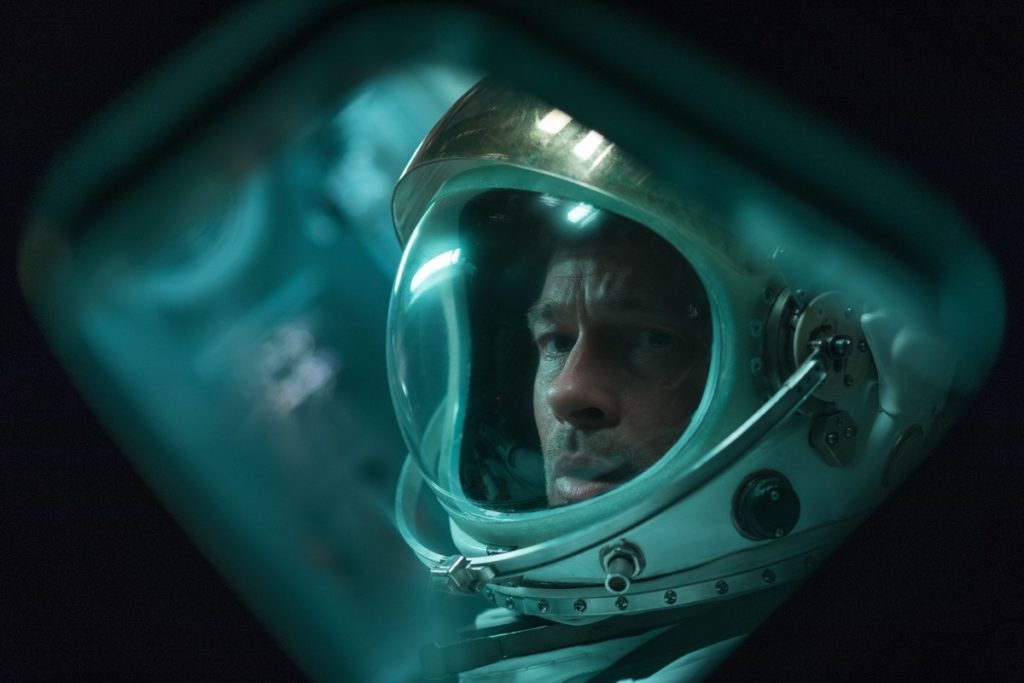
Ever since I was about six years old—when my parents took me to see E.T.—science fiction has been one of my favorite genres. I have always been fascinated by films exploring outer space and extraterrestrial life. Ad Astra delivers on both fronts, backed by a stellar cast including Brad Pitt, Tommy Lee Jones, Donald Sutherland, and Liv Tyler. The atmospheric score by Max Richter beautifully complements the breathtaking cinematography by Hoyte van Hoytema (Interstellar), who, in my opinion, truly steals the show. Wonderful work once again!
The Premise: A Journey into the Unknown
To offer a brief synopsis: In the near future, humanity has advanced deep into space exploration, launching a search for intelligent extraterrestrial life. Thirty years ago, Clifford McBride (Tommy Lee Jones) led an expedition into deep space, but his ship and crew were never heard from again. Now, his son, Roy McBride (Brad Pitt)—a fearless yet emotionally detached astronaut—must embark on a daring mission to Neptune. His goal is to uncover the truth about his missing father and stop a mysterious energy surge that threatens the stability of the universe and all life on Earth.
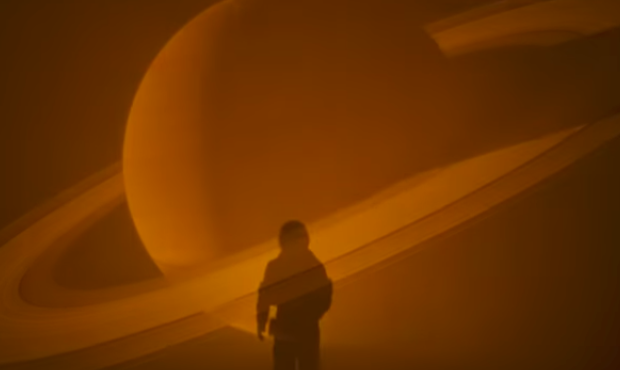
The Cosmic Mirror: What Resonated and What Fell Short
Recently, sci-fi cinema has frequently intertwined cosmic exploration with deeply personal parent-child dynamics—a trend perhaps popularized by the success of Interstellar, and continued in films like First Man, Arrival, and now Ad Astra. To be entirely honest, this emotional thread is what resonated with me the least.
At times, the execution felt cliché and repetitive. I found it difficult to connect with the characters on a profound emotional level; their conflicts lacked the raw depth needed to make me truly care about their resolution. This occasional lack of character development made certain moments feel a bit melodramatic.
However, Ad Astra is far more than a typical journey across the galaxy or a simple family drama. It is, undoubtedly, a philosophical space adventure. When analyzed through this symbolic lens, the dynamic of an absent, lost father and a son desperately seeking answers takes on an entirely new and fascinating dimension.
Dual Odysseys: Psychological Realism and Introspection
The film masterfully balances two parallel narratives: Roy’s physical journey across the solar system and his internal, introspective odyssey. These two paths initially conflict but ultimately find a strange communion.
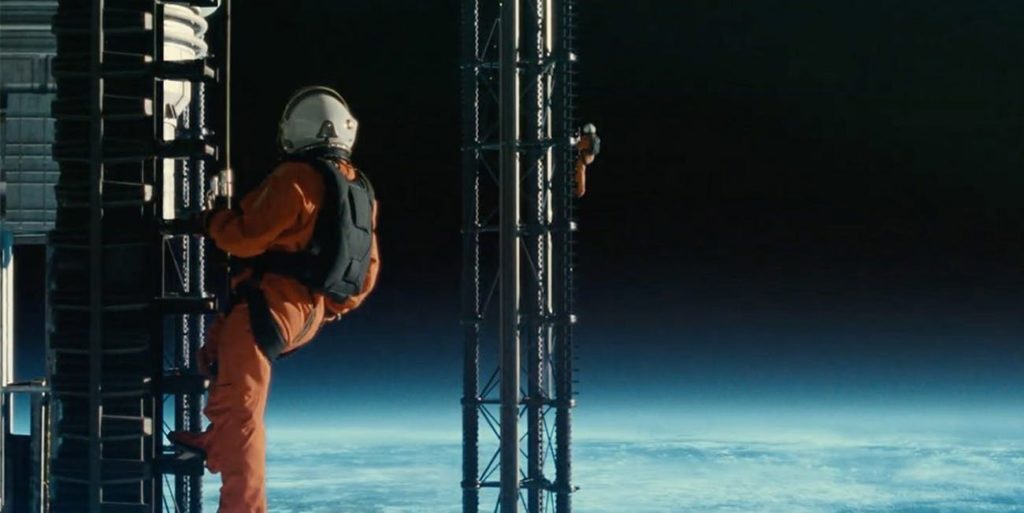
Visually, Roy’s journey from the Earth to the Moon, Mars, and beyond is a spectacular work of art. The impeccable composition of each shot seamlessly blends elements of suspense, action, and melancholy. You can distinctly feel the artistic influence of Stanley Kubrick’s 2001: A Space Odyssey, alongside echoes of classics like Solaris, Contact, and Gravity. While you accompany Roy through the vastness of space—experiencing the dizzying suspense and breathtaking colors—you are also fully immersed in his psychological landscape.
The film frequently addresses core philosophical questions regarding human existence: the weight of isolation, our innate need for connection, and the fragile nature of mental health. As Roy travels further from Earth, undergoing continuous psychological evaluations, we witness the gradual deterioration of stability in those who isolate themselves from human warmth.
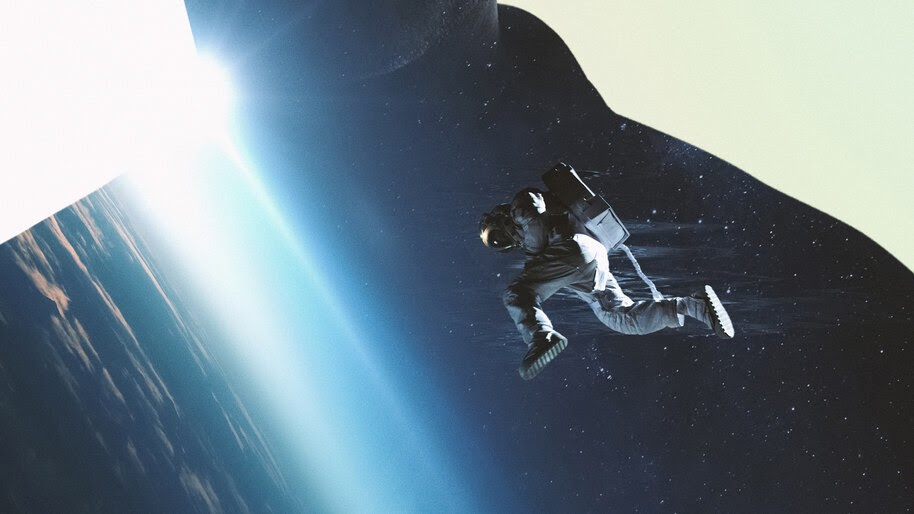
The Weight of Cosmic Isolation
Throughout the film, we watch Roy undergo continuous psychological evaluations. As his distance from Earth increases, we witness the gradual deterioration of the human mind—highlighted by the tense events at the space station, the outpost on Mars, and his eventual journey to Neptune to confront his father. Initially, I felt the film was too explicit, explaining its themes constantly rather than leaving room for interpretation.
Upon reflection, however, I realized I might have been mistaken. As cinephiles, we sometimes risk reading too much into a film, but I truly believe there is a powerful undercurrent here. Between the lines, Ad Astra explores our relationship with the forces of creation and our role—however insignificant it may seem—within the infinite expanse of space.
A Critique of Consumerism and Connection
Furthermore, the film offers a quiet but piercing critique of consumerism and our own superficiality. A specific line spoken by Roy deeply resonated with me: “We are world-eaters.” (Interestingly, this exact phrase also caught my attention in the movie The Fourth Kind). If we pair this stark realization with the classic words of the Roman poet Virgil—“sic itur ad astra” (thus one journeys to the stars)—a chilling conclusion emerges: We are devourers of worlds; therefore, we must escape to the stars.
Ultimately, taking all of this into consideration, the film forces us to confront the most profound questions about our existence: Where do we come from, and where are we ultimately going?

Finally, perhaps James Gray’s ultimate message is that venturing into the vastness of space is sometimes necessary to rediscover our own emotional mechanisms. It forces us to appreciate time, community, and the profound importance of human connection right here on Earth.
Final Recommendation
A Note for Parents: Is Ad Astra Suitable for Children?
Since many readers arrive here wondering if Ad Astra is a good choice for a family movie night, let’s address this directly. The film is officially rated PG-13 for some violence, bloody images, and brief strong language. However, the primary reason it might not be suitable for younger audiences is its pacing and thematic gravity.
This is not a fast-paced, action-packed space adventure. Instead, it is a slow, deeply introspective psychological drama that deals with complex themes like emotional abandonment and mental isolation. Younger children will almost certainly find it slow and lose interest quickly. I highly recommend saving this beautiful film for an adult viewing or with older teenagers who appreciate philosophical cinema.
The Final Verdict: A Journey Worth Taking
Do not miss it. I highly recommend watching Ad Astra without rigid expectations—simply let yourself be carried by its rhythm. While it demands an open mind and has its flaws, the film left me deeply reflective and completely captivated by its visual poetry. Learn from my initial mistake: do not settle for a small screen. Even if you are watching from home, make sure to experience this breathtaking cinematography on the largest screen and with the best sound system you have available.
If you have seen it, I would love to hear your thoughts in the comments. What did this cosmic journey mean to you? It certainly gives us a lot to talk about. Until next time!






Leave a Reply