

Grocery prices continue to rise, and many families feel it every week at checkout. From food staples to household essentials, small increases add up quickly.
The good news is that saving money on groceries does not always require extreme couponing or cutting everything you enjoy. Often, the biggest results come from smarter habits, better planning, and a few simple changes.
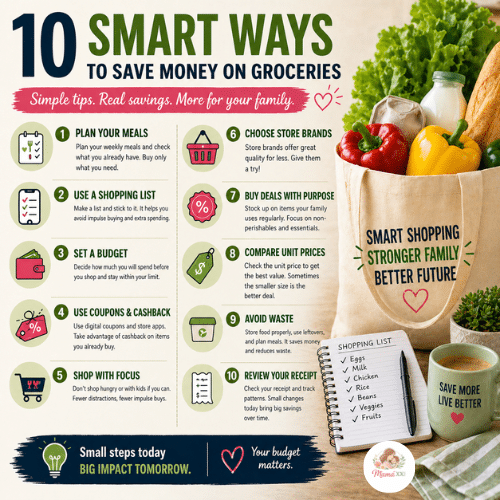
Here are 10 smart ways to lower your grocery bill in 2026 and take more control of your family budget.

1. Create a Weekly Meal Plan
A weekly meal plan helps you buy only what you truly need. Before shopping, check your fridge, freezer, and pantry first.
Using ingredients you already have is one of the easiest ways to save money on groceries.
2. Use a Digital Shopping List
Keep your grocery list on your phone or use a shared family app. Then stick to it.
If an item is not on the list, pause before adding it to the cart. This habit can greatly reduce impulse purchases.
3. Set a Grocery Budget Before You Shop
Choose a spending limit before entering the store or placing an online order.
Knowing your grocery budget in advance helps you make clearer decisions and avoid overspending.
4. Use Store Apps, Coupons, and Cashback
Many supermarkets now offer digital coupons, rewards programs, and cashback deals.
Use discounts on products you already planned to buy. If it was not on your list, it may not be a real saving.
5. Never Shop Hungry
Shopping while hungry often leads to impulse buys and extra snacks.
A quick snack before leaving home can help you stay focused and protect your grocery budget.
6. Try Store Brands
Store brands have improved significantly in recent years. Many offer similar quality at lower prices than national brands.
Test basic items like rice, pasta, flour, canned goods, or cleaning supplies.
7. Buy Sale Items with Purpose
Sales are helpful when you buy products your household regularly uses.
Good examples include toilet paper, detergent, pasta, frozen vegetables, or shelf-stable pantry staples.
8. Compare Unit Prices
Do not look only at the package price. Check the unit price on the shelf label to compare cost per ounce, pound, or item.
Sometimes the smaller package is the better deal.
9. Avoid Waste at Home
Saving money on groceries also happens after checkout.
Store food properly, freeze leftovers, rotate older items forward, and plan one meal each week using what is already in the fridge.
10. Review Your Receipt
Take one minute to review your receipt after shopping.
You may notice repeat impulse purchases, price increases, or items that were not necessary. Small awareness creates better habits over time.
Final Thought
No family needs to shop perfectly to save money. A few smart grocery habits repeated each week can create real relief over time.
Choose one or two tips to start this week and build from there.
What Works for You?
What is one grocery habit that helps your family save money each month?
You May Also Like
The Cost of Living in the United States: What Many Families Feel and Few Say Out Loud.







[…] understand that managing a household comes with its costs. Adopting is a significantly more sustainable path; shelters generally include essential veterinary […]